Tucker’s self-blinding policy
Bird BoxTucker’s self-blinding policy was an early communal survival rule, adopted after a creature breached the settlement and the resulting crisis cost several lives. The policy made blindness the price of security; years later, the community had moved away from it, revealing that its rules changed as its defenses and circumstances changed.
The catastrophe behind the policy
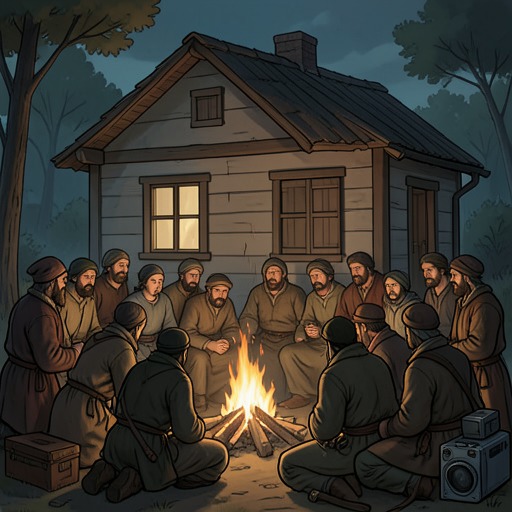
Rick explains that the community’s earliest members were starving and lacked the security it would later build. While a group went out to search for food, a creature entered the settlement. In the ensuing crisis, a mother who had been rational killed four children. The community took months to recover and rebuild, and the loss became the reason it resolved not to expose itself to the same risk again.
The decision was collective and shaped by conditions of scarcity as much as by fear. The survivors had needed to hunt for food, but going out also left them vulnerable; after the breach, protecting the community became the overriding concern. Their response was not presented as a policy chosen from comfortable alternatives. Rick says they had no choice.
Blindness as protection
The community’s members blinded themselves using whatever was available, including forks, kitchen knives, and their fingers. This was the practice Rick describes as the old way: blindness was considered absolute protection against the danger of seeing the creatures. The policy therefore turned a preventive measure into an irreversible bodily cost borne by the people it was meant to keep safe.
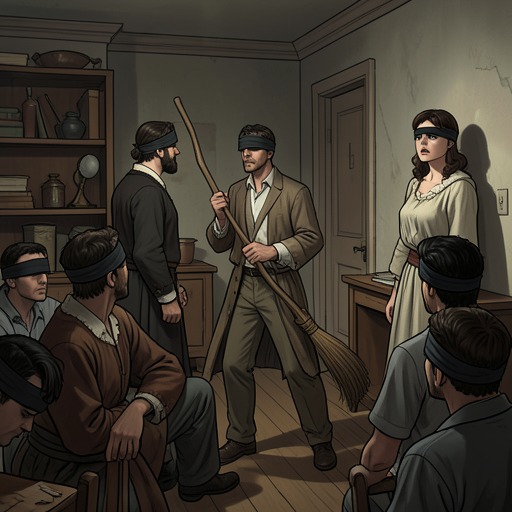
Its severity contrasts with the ordinary routines of the Riverbridge house, where residents survive while blindfolded rather than by permanently blinding themselves. There, Malorie insists that she and the children must never remove their blindfolds, and essential tasks are adapted to life without sight: the residents fetch well water by rope, bucket, and a marked path. The contrast shows that blindness and blindfolding are distinct survival strategies, with the former representing Tucker’s earlier, more drastic rule.
The policy’s limits and legacy
After a year, Rick says, the Tucker community judged that it had fortified the settlement enough to ease the burden of self-blinding. He reports no security lapses since that change. The former absolute rule thus gave way to a system in which the community relied on its strengthened defenses rather than requiring every member to surrender sight.
Malorie’s arrival makes the history personal. When Rick explains the old practice, she remembers George’s failed video experiments and her own near decision to blind her children. Tucker’s past gives that desperate possibility a communal precedent, while its later policy change underscores that absolute protection had been a stage in the settlement’s survival rather than its permanent condition.